

 Image 1 of 5
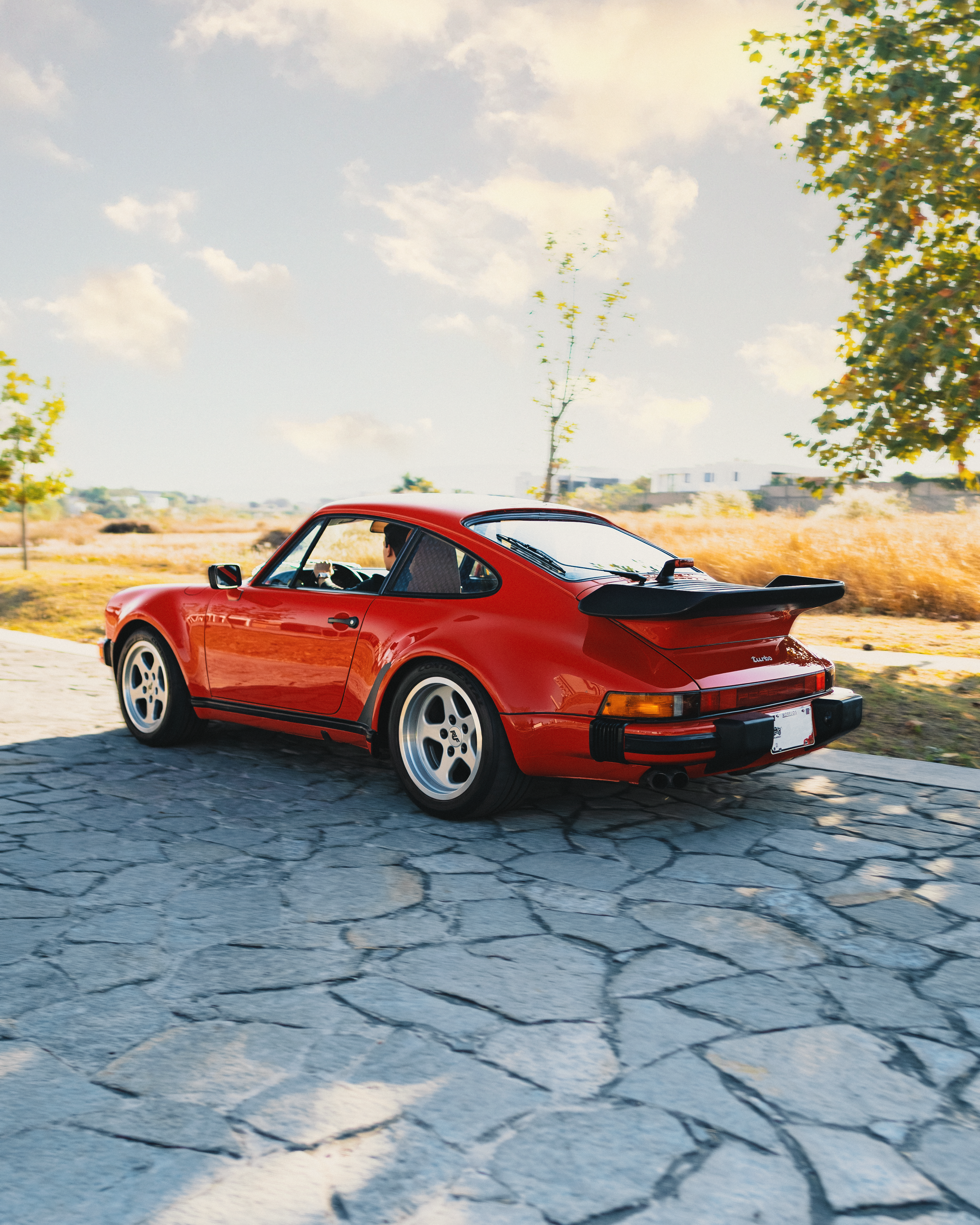 Image 2 of 5
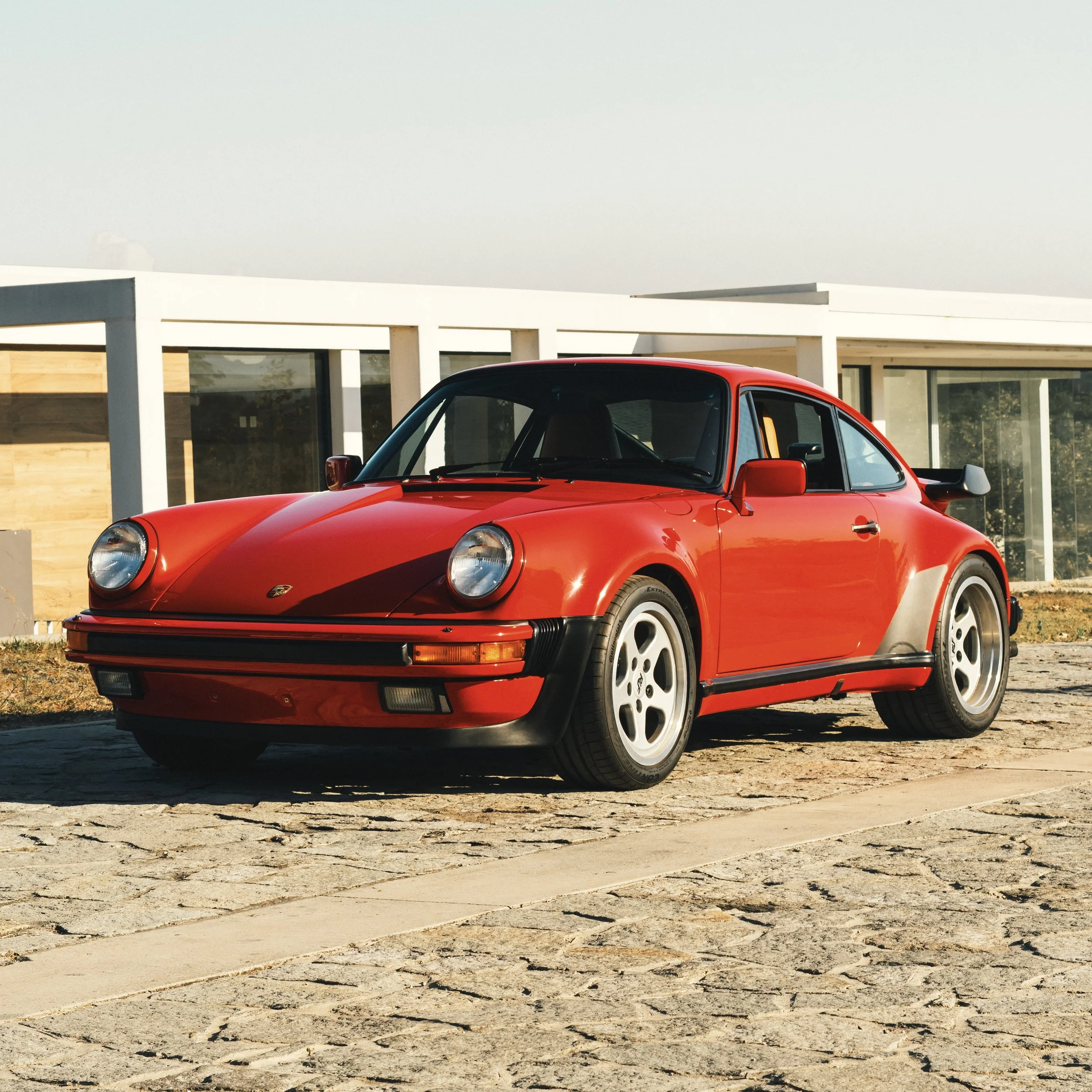 Image 3 of 5
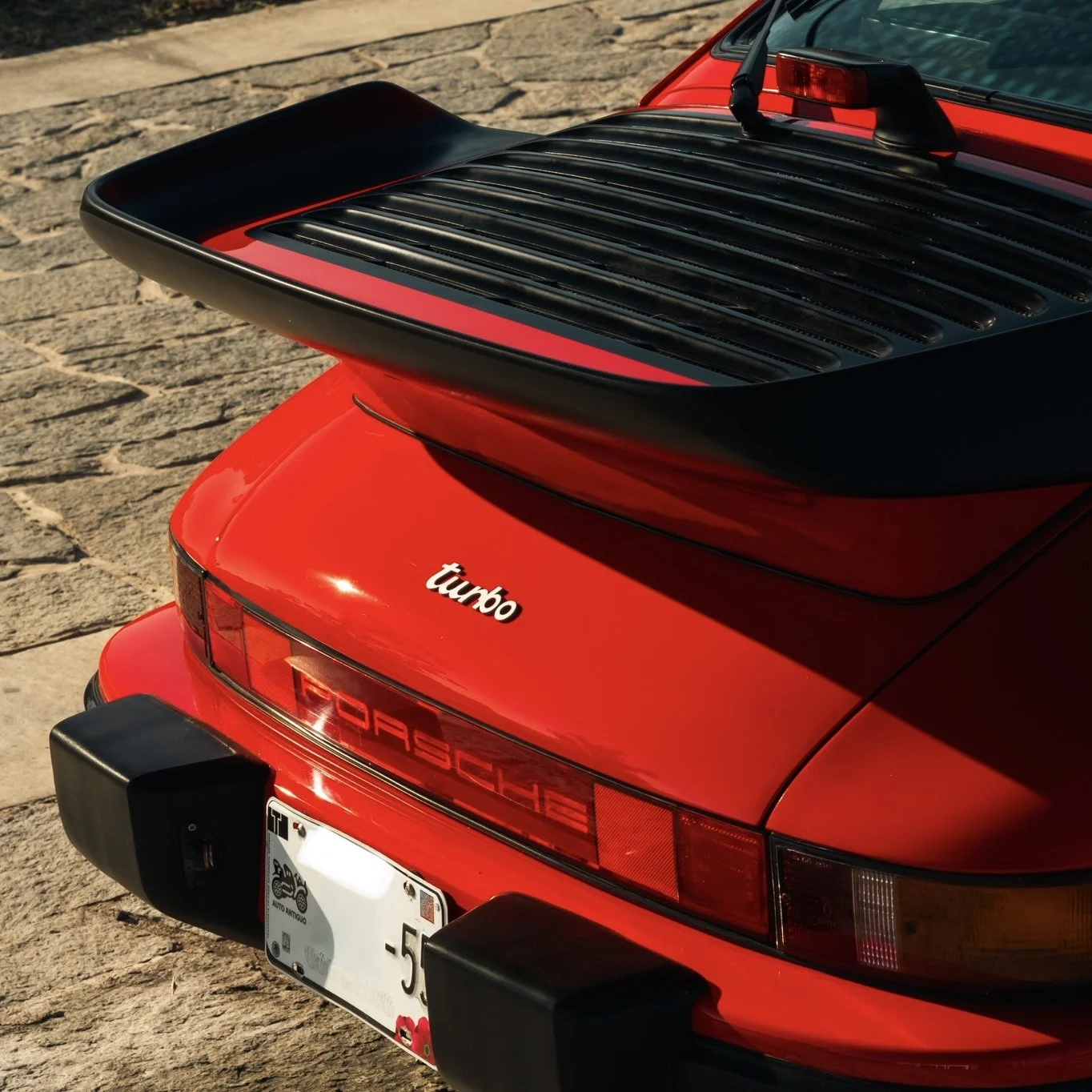 Image 4 of 5
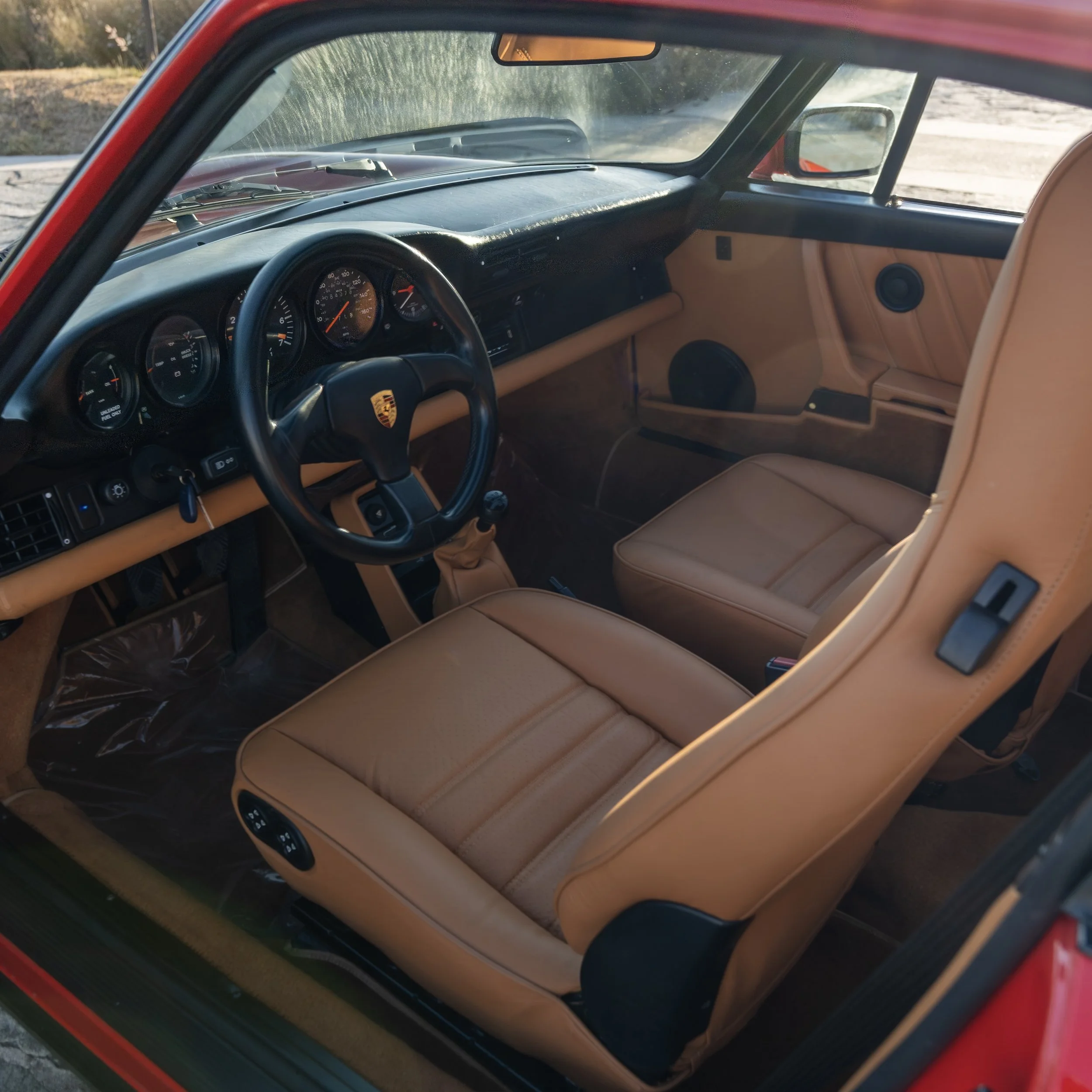 Image 5 of 5
1987
1987 Porsche 930 Turbo — Indian Red (Guards Red)
A classic distilled to its essence: the 1987 Porsche 930 Turbo in Indian Red (often called Guards Red) is the archetype of 1980s Porsche performance and style. This car combines a brutally effective turbocharged drivetrain with unmistakable Porsche proportions and a color that both flatters and demands attention.
Exterior
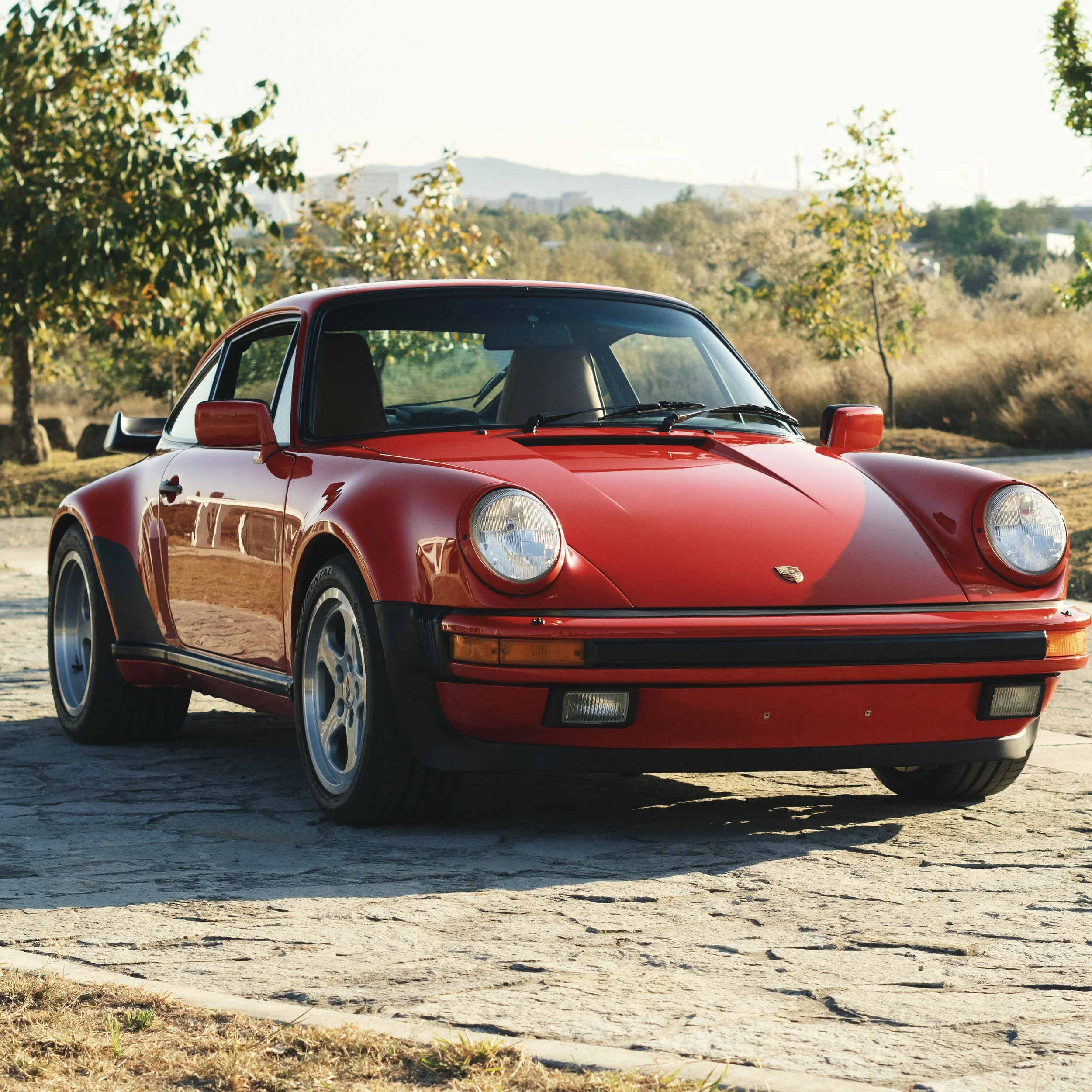
Color: Indian Red (Guards Red) — a vivid, saturated red that accentuates the 930’s wide hips, pronounced fender flares, and whale-tail rear spoiler. The paint emphasizes the car’s purposeful stance and timeless silhouette.
Body: Iconic 930 wide-body layout with integrated front and rear fenders, deep front valance, and the famed “tea-tray” spoiler. Chrome and black trim elements remain minimal, keeping focus on form and color.
Wheels: Classic Fuchs-style or period-correct alloy wheels (commonly 16-inch) with dark centers and polished lips, filling the arches and adding to the muscular look.
Details: Single-piece rear bumper, round headlamps, and the simple, functional door mirrors typical of the era. The Guards Red finish accentuates panel gaps and light play—especially striking in direct sun.
Interior
Layout: Driver-focused cockpit with deep-set seats, simple analog gauges, and a three-spoke steering wheel. The cabin is compact and purposeful; controls are mechanical and tactile.
Trim: Common period interior combinations include black leather or two-tone leather/suede. Red exterior often paired with black interiors for a classic, sporty contrast.
Instrumentation: Large centrally placed tachometer, oil temperature and pressure gauges, boost gauge (in many Turbo models), and straightforward HVAC and audio controls. No modern driver assists—pure mechanical feedback.
Performance & Driving Character
Engine: 3.3-liter flat-six with single turbocharger (earlier Turbos used a single turbo with mechanical fuel injection and air-cooled heads). The 930’s torque-heavy delivery makes it explosive off the line but also requires respect—turbo lag followed by a strong surge is part of the character.
Power & Torque: Factory-rated outputs in the mid-200s horsepower range (varies by market and model year) with substantial midrange torque. Many examples have been modified or restored, affecting output.
Transmission: 4-speed manual (early 930s) or 5-speed in some late-model variants; manual shifting is integral to the driving experience.
Handling: Wide track, stiff suspension, and rear-engine bias create exceptional traction under acceleration and a unique handling balance—very rewarding to skilled drivers but abrupt at limit without electronic aids.
Sound: A distinctive flat-six burble transitioning to a turbocharged howl under boost; exhaust tone is raw and mechanical.
Collectibility & Ownership
Rarity: The 930 Turbo is one of the most recognizable and collectible 911s from the 1970s–80s era. A Guards Red example is especially desirable for its classic Porsche color and visual presence.
Market: Values depend heavily on provenance, mileage, originality, and mechanical condition. Matching-numbers cars with documented history command premiums.
Maintenance: Air-cooled engines and vintage turbo systems require specialized knowledge. Owners should expect higher maintenance compared to modern cars—regular valve adjustments, turbo inspection, and careful cooling/oil practices.
Practicality: Not a daily commuter by modern standards—limited cargo space, noisy cabin, and no modern safety/comfort technology. Rewarding for weekend drives, shows, and collectors.
1987
1987 Porsche 930 Turbo — Indian Red (Guards Red)
A classic distilled to its essence: the 1987 Porsche 930 Turbo in Indian Red (often called Guards Red) is the archetype of 1980s Porsche performance and style. This car combines a brutally effective turbocharged drivetrain with unmistakable Porsche proportions and a color that both flatters and demands attention.
Exterior
Color: Indian Red (Guards Red) — a vivid, saturated red that accentuates the 930’s wide hips, pronounced fender flares, and whale-tail rear spoiler. The paint emphasizes the car’s purposeful stance and timeless silhouette.
Body: Iconic 930 wide-body layout with integrated front and rear fenders, deep front valance, and the famed “tea-tray” spoiler. Chrome and black trim elements remain minimal, keeping focus on form and color.
Wheels: Classic Fuchs-style or period-correct alloy wheels (commonly 16-inch) with dark centers and polished lips, filling the arches and adding to the muscular look.
Details: Single-piece rear bumper, round headlamps, and the simple, functional door mirrors typical of the era. The Guards Red finish accentuates panel gaps and light play—especially striking in direct sun.
Interior
Layout: Driver-focused cockpit with deep-set seats, simple analog gauges, and a three-spoke steering wheel. The cabin is compact and purposeful; controls are mechanical and tactile.
Trim: Common period interior combinations include black leather or two-tone leather/suede. Red exterior often paired with black interiors for a classic, sporty contrast.
Instrumentation: Large centrally placed tachometer, oil temperature and pressure gauges, boost gauge (in many Turbo models), and straightforward HVAC and audio controls. No modern driver assists—pure mechanical feedback.
Performance & Driving Character
Engine: 3.3-liter flat-six with single turbocharger (earlier Turbos used a single turbo with mechanical fuel injection and air-cooled heads). The 930’s torque-heavy delivery makes it explosive off the line but also requires respect—turbo lag followed by a strong surge is part of the character.
Power & Torque: Factory-rated outputs in the mid-200s horsepower range (varies by market and model year) with substantial midrange torque. Many examples have been modified or restored, affecting output.
Transmission: 4-speed manual (early 930s) or 5-speed in some late-model variants; manual shifting is integral to the driving experience.
Handling: Wide track, stiff suspension, and rear-engine bias create exceptional traction under acceleration and a unique handling balance—very rewarding to skilled drivers but abrupt at limit without electronic aids.
Sound: A distinctive flat-six burble transitioning to a turbocharged howl under boost; exhaust tone is raw and mechanical.
Collectibility & Ownership
Rarity: The 930 Turbo is one of the most recognizable and collectible 911s from the 1970s–80s era. A Guards Red example is especially desirable for its classic Porsche color and visual presence.
Market: Values depend heavily on provenance, mileage, originality, and mechanical condition. Matching-numbers cars with documented history command premiums.
Maintenance: Air-cooled engines and vintage turbo systems require specialized knowledge. Owners should expect higher maintenance compared to modern cars—regular valve adjustments, turbo inspection, and careful cooling/oil practices.
Practicality: Not a daily commuter by modern standards—limited cargo space, noisy cabin, and no modern safety/comfort technology. Rewarding for weekend drives, shows, and collectors.